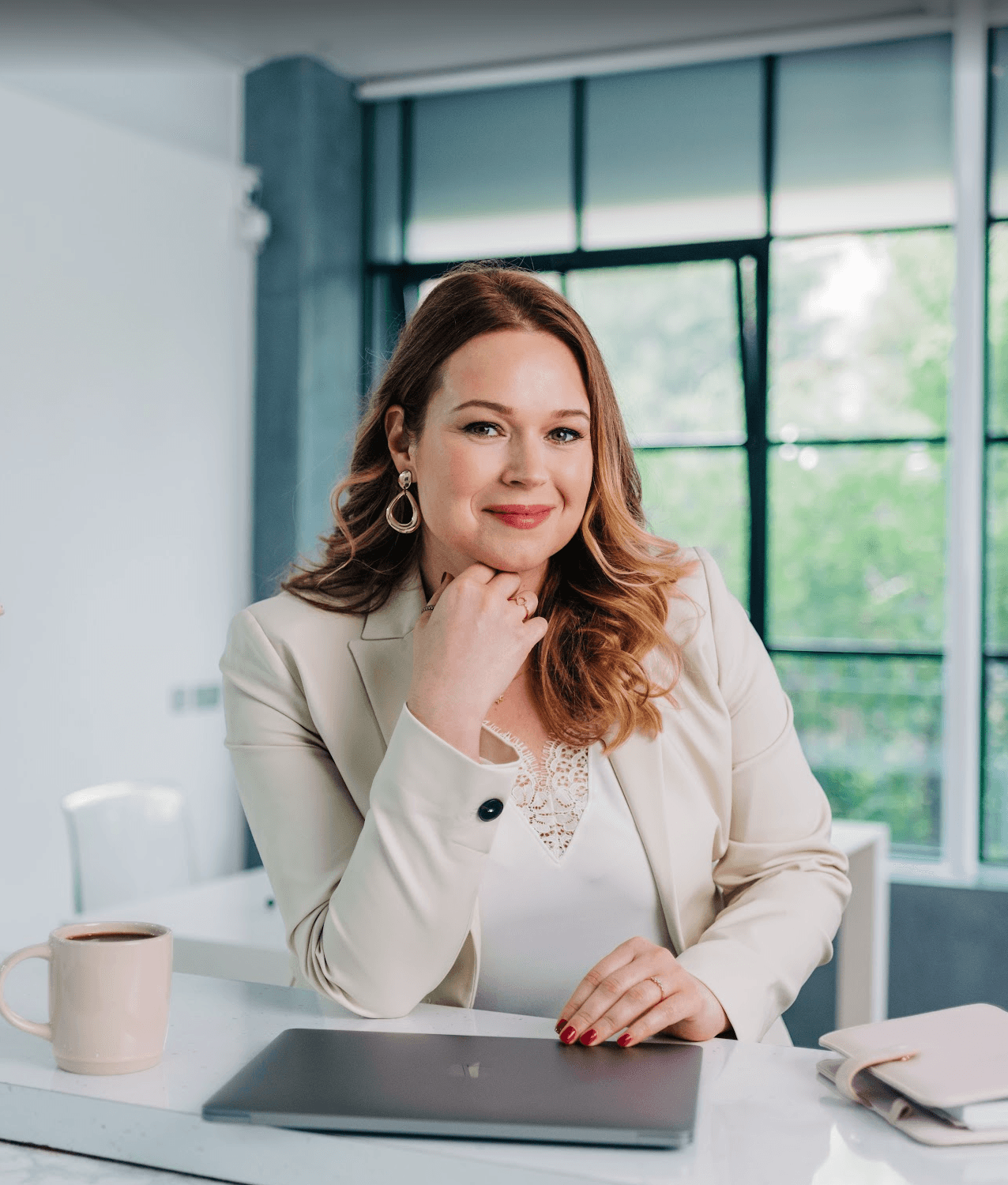
High Performance Coach: Because Even the Best Can Get Better
You're already good at what you do. You know you can reach the goal.
What you want is to get there faster, and to stop getting in your own way.
That's where I come in.
Why my high performance coaching goes deeper than your morning routine
Routines, habits and productivity systems are great. I'm a fan. But they rarely reach the level where your performance is really decided: who you believe you are.
As your high performance coach, I go to that level. We look at what works best for you, so you work with yourself instead of against yourself. Since 2017 I've coached ambitious professionals, leaders, founders and six- and seven-figure business owners, and I've seen it again and again: at a high level, one small change in the right place brings a big return.
I'm warm, but I don't do coddling. If you want someone to cheer you on while nothing changes, I'm the wrong coach.
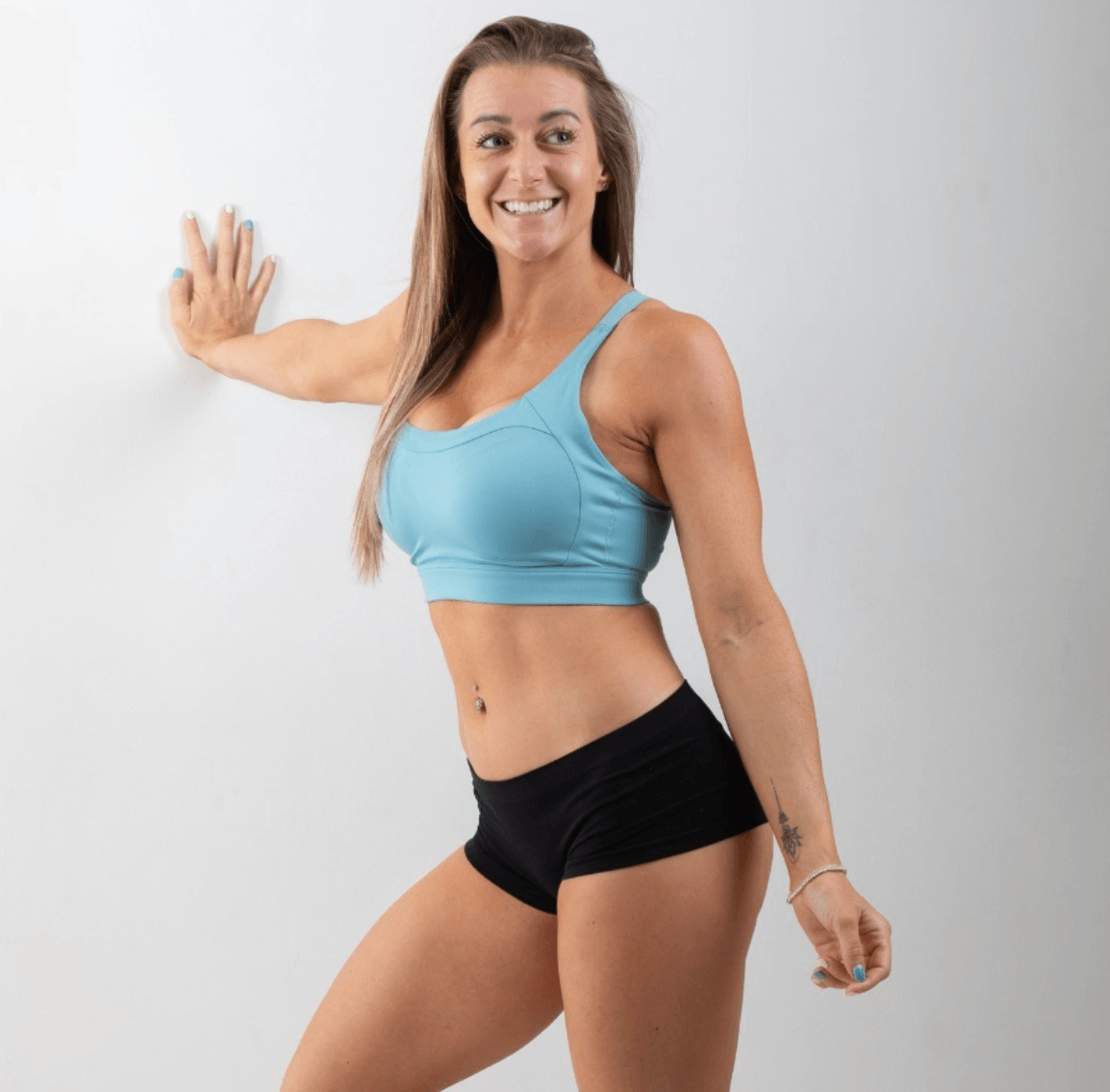
Client story
"The biggest breakthrough for me was recognising how my emotions and mental state could easily hijack my working day and therefore my business. I would do things based off of 'feelings' vs actual backed up data."
Claire Crowley
Online Fitness Coach and host of The Strong Feminine
Claire learned to tell focused work that moves her business forward from busy work that just keeps the wheels turning. Today she has better time management, firmer boundaries, and the space to choose how she shows up.
What is high performance coaching?
High performance coaching helps people who already do well perform at a higher level, consistently. On the good days and the hard ones.
Here's how I see it. The highest level of performance is being able to say clearly what you want, and then do what is required to get it. Simple to say. Much harder to live.
Whatever your goal, it comes down to two skills: managing your mind and managing your emotions. Mental strength and emotional resilience.
And by managing your emotions, I mean leaning into them and feeling them fully. No pretending they're not there, no avoiding them, no pushing them down. As your emotional strength grows, your behaviour gets stronger too. You follow through. You stay consistent. You do the thing, even when part of you would rather not.
I call it learning to obey yourself. Your mind and your emotions stop giving the orders, and you perform at the level your goals ask of you.
Using timeless self-development principles, we turn your mind into your most valuable asset. And because we build everything around you instead of someone else's routine, it's truly personal performance coaching.
Is high performance coaching for you?
Recognise yourself in a few of these? Then we should talk.
You've been at the same level for a while, and you know there's more in you.
You can do it all, so you end up doing it all. Your plate is so full you can't see the goal for the tasks.
You want everything, and you want it now. If it's not perfect by Friday, part of you calls it a failure.
You're consistent for three weeks. Then life happens, and you're back at square one. Again.
You hit a goal and you're straight on to the next one. Celebrate? You'll do that later. (You won't.)
When things go well, you feel unstoppable. When they don't, the voice in your head takes over, and it takes days to get back up.
On the goal that really matters, the fear of failing keeps you playing it safe.
When the pressure builds, you reach for the same escape: the extra glass of wine, the late-night scrolling, one more coffee. And it costs you the next day.
Big decisions take you far longer than they should, because you want to be sure first.
I work with business owners, leaders and ambitious professionals. For business owners, this is high performance business coaching. For people leading inside a company, it's executive performance coaching. The environments are different. The core work underneath is the same.
Performance mindset coaching: what we work on
Know exactly what you want. Clear goals, so your energy goes where it counts instead of everywhere at once.
Protect your focus. In a world built to steal your attention, being able to keep the main thing the main thing is an unfair advantage. We sort what only you can do from what you can let go of, so your best hours go to the work that moves you forward.
Make better decisions, faster. Decide with your head as well as your gut, look at the facts, and trust yourself to adjust if you get it wrong.
Stop being scared of getting it wrong. Fear of failure and fear of making mistakes drag your performance down. Once we change how you see them, you move faster and go for the bigger goal.
Swap all-or-nothing for progress. "Perfect or pointless" keeps you starting over. We build the kind of consistency that survives a bad week.
Follow through, even when you don't feel like it. You learn to feel the resistance and act anyway, and I hold you accountable while that becomes second nature.
Underneath all of this is a growth mindset: every one of these is a skill, and skills grow with practice. That's peak performance coaching the way I do it. Small changes at the right level. Big returns.
Being hard on yourself is slowing you down
Most high performers I meet have a harsh inner critic. They believe it's the reason they've done so well. Take it away, and they'd go soft.
I get it. But here's what I see again and again: the louder the critic, the more dangerous failure feels. So you play it safe, take longer to recover from a setback and avoid the very risks that would get you there faster.
Self-compassion gets a bad name because people think it means letting yourself off the hook. With me, the bar stays exactly where it is. Self-compassion is how you treat yourself when you miss it: you look at what happened, take the lesson and get back up fast.
"Self-compassion is not lowering the bar. It's removing the unnecessary suffering between where you are and where you're capable of going."
The research agrees. In a 2023 study, university athletes who took a short self-compassion programme became less self-critical and felt they performed better than athletes who didn't (study). And in a study at Berkeley, people who were kind to themselves after failing a test went on to study longer for the next one (study). Being kind to themselves made them try harder.
Kind to yourself, tough on your goals. That's what I mean by a heart of gold and a mind of steel. No coddling, just less wasted energy, faster recovery and a lot more resilience.
What changes
Clients have gone from 10k to 50k months while working less, taken on bigger teams, had their biggest month in business, and set bigger goals and achieved them. Inside, they describe the same shifts:
You follow through without having to force yourself.
A mistake stings for a minute. Then you take the lesson and move on.
You make decisions faster, and you trust them.
Your energy goes into the work that actually moves you forward.
You go after the bigger goal, because failing no longer feels like the end of the world.
You actually enjoy your wins, and you feel you've earned them.
Put together, these shifts create the simplest and most powerful growth strategy there is: momentum.
Why work with a high performance coach?
You could get there on your own. I mean that. You're capable, and you've proved it.
The question is how long it'll take, and what it'll cost you on the way. In time, in money, in energy, in the years you spend circling the same goal.
At a high level, the gaps are small. A belief here. A fear there. A habit of second-guessing yourself. Small things with a big price tag. Fix them, and the return is huge.
That's why people who already perform well hire a coach. They want to get there faster, and they're done wasting time getting in their own way.
What high performers say
"I'm no longer my own worst critic. I now support myself and have more courage to set bigger goals and achieve them."
Ellie Nicholson, Property Developer & Investor, UK
"The strength of being coached by Alex is that she would see where I would try to settle and she wouldn't let me."
Lindsay Hood, Life Coach, UK
"I feel the future is bright as I know how to handle my own mind."
Helen Munshi, Owner of Startup Studio, UK
High performance coaching FAQs
Performance coaching helps you perform better at what matters to you. At work, it's often about hitting targets in a role. My version goes deeper and is personal: we work on your mind, your emotions and your habits, so better performance becomes how you operate, every week. You get there faster, and you stay there.
A high performance coach helps capable people close the gap between what they know they can do and what they actually do. With me, that means three things.
First, we find what drags your performance down. Often it's a fear or a belief you didn't know you had. Sometimes it's a habit you reach for when you're stressed, one that ends up working against the very goal you say you want.
Second, we build your mental strength and emotional resilience, so you can act anyway.
Third, I hold you accountable, so what you realise in our sessions turns into action.
Most people already know what to do. What stops them is the fear of getting it wrong, the doubt before a big decision, the guilt when they put their own goals first. Coaching helps you notice those feelings, feel them through and act on what you know anyway. Do that consistently, and your results follow.
No. Pushing harder is usually what high performers have been doing for years, and it's exhausting. I keep your standards high and take away the unnecessary suffering: the harsh self-talk, the all-or-nothing thinking, the fear of failure. Most clients find they achieve more with less force. If you're already running on empty, my burnout coaching may be the better place to start.
Business owners, leaders and ambitious professionals who are already doing well and want more. Some come to me as a high performance coach for entrepreneurs: they're growing fast and want the business to keep up with their ambition. Others want a high performance life coach who looks at the whole picture, because a hard year at home shows up in your results at work.
Many clients notice a shift within weeks: a decision made faster, a conversation they'd been putting off, a mistake that didn't ruin the week.
I'm going to say this with love. Today's world has trained your brain to want everything now. Quick fixes, instant results, a new hack every week. That short-term thinking is exactly what keeps high performers stuck.
Change you get to keep takes time. That's why I work with clients for six months. My coaching is for people ready to think long term and respect that some things take as long as they take. If you're after a quick fix, there are plenty of people selling one.
I build every programme around the person, so the price is a personalised quote I'll give you after we talk. The main programme is six months: sessions of 60 to 90 minutes, plus unlimited support between them. Both the initial conversation and the deep consultation are free, so there are no surprises.
Yes, all my coaching happens online, on Zoom, so it fits around your diary and your travel. I work with clients across the UK, Europe, the US and wherever in the world you are. We find a time that works for both of us.
Ready to get there faster?
You've already proved you can do hard things.
You'll probably get there anyway. But at what cost? Another year of fighting yourself. Opportunities that go to someone faster. Energy you'll never get back. Or you become the person who does what they say they'll do, and get there sooner.
Other ways I can help: Life and mindset coaching · Confidence coach · CEO coach · Leadership coach · Productivity coach · Imposter syndrome coach · Burnout coach · Accountability coach · Success capacity coaching