Imposter Syndrome Coaching: Feel the Success You've Already Built
On paper, you've made it. So why can't you feel it?
Everyone tells you you're doing great. So why do you still fear being found out?
If you're tired of being the only one who can't see how good you actually are, I can help.
What is imposter syndrome coaching?
Lots of people say "I have imposter syndrome" when what they really mean is "I'm nervous". They're about to do something they've never done before, and so of course they doubt themselves. That's normal, and it's what my confidence coaching is for.
Imposter syndrome shows up later. You've already done it. You have the track record, the results, the people who rely on you. Everyone around you can see how capable you are. You can't. Or you know it in your head, but you can't feel it.
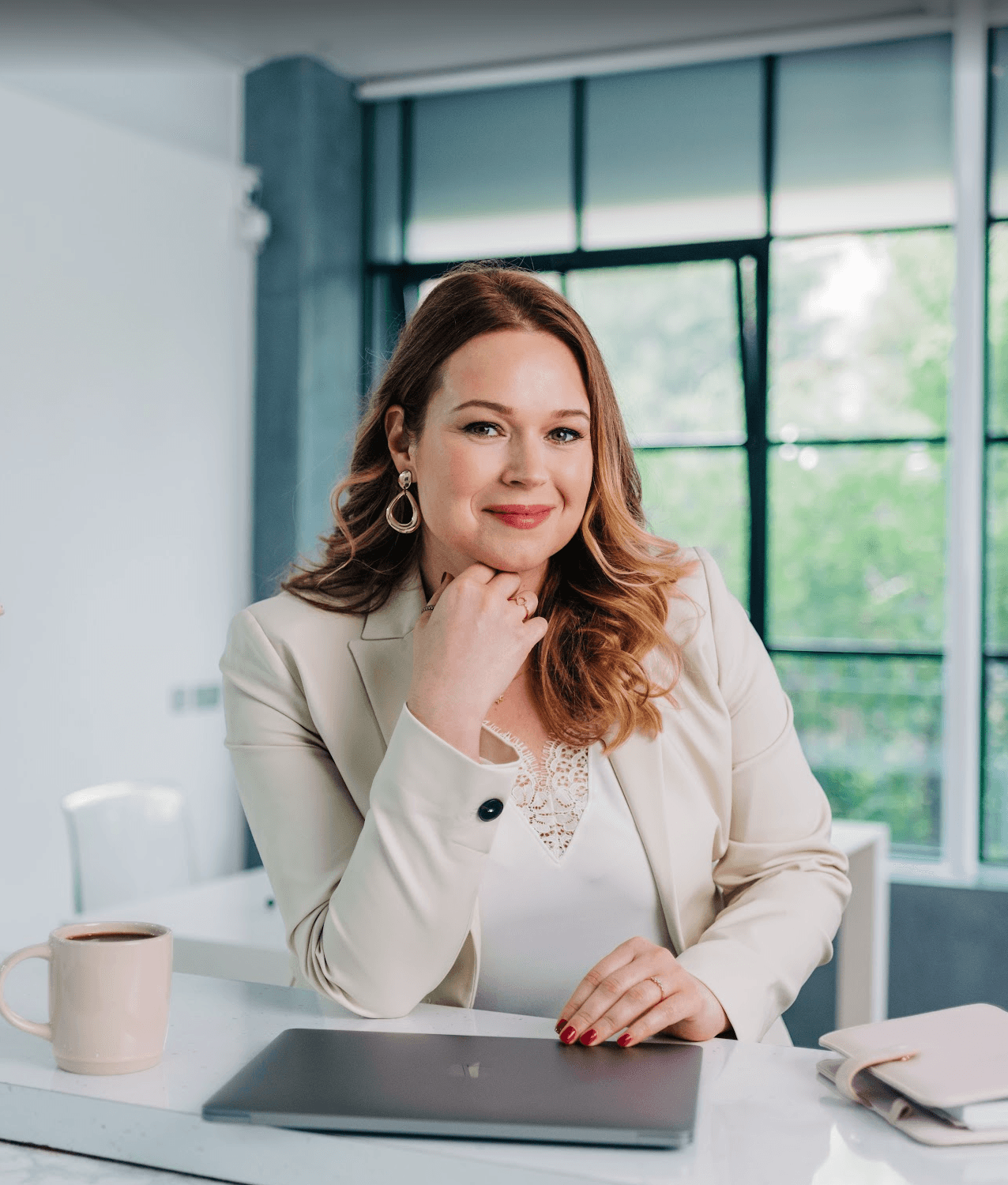
As your imposter syndrome coach, I help you finally see yourself clearly, and own it.
So what's actually going on? You believe every thought your mind gives you. But just because you think something doesn't make it true. Tell yourself for years that you're not the real deal, and of course you'll feel doubt. Your feelings simply follow the story.
So we work on both. Mental strength, so you can rewire the thinking that doesn't help you. And emotional resilience, so you can handle the feelings you've never known what to do with. Like when someone praises your work and you instantly brush it off, because sitting with it feels too strange.
Signs you need coaching for imposter syndrome
Fear of being found out. Under everything sits a constant worry that your boss, your clients or your team will realise you don't know as much as they think you do.
Putting it down to luck. You tell yourself it was good timing, the right contacts, or maybe even a mistake that they picked you. Anything except your own hard work and skill.
Brushing off praise. Compliments make you squirm. Someone says "You're brilliant at this" and it feels awkward and uncomfortable, so you push it away or list three things that went wrong.
Overworking. You check everything twice and say yes to the extra project, the late call, the weekend work. If you work hard enough, maybe nobody will notice how inadequate you secretly feel.
Moving the bar. You hit the goal, and before you've even told anyone, you've raised it. You can recall every mistake from the last five years, but struggle to name a single thing you're proud of.
Putting it off. The bigger the opportunity, the longer it sits on your to-do list. Starting means you might find out you're not good enough.
Comparing yourself. You scroll past people in your field and think, "They're the real experts. I'm just pretending."
Shrinking. The moment the spotlight turns to you, all you want is to disappear.
And nobody knows. From the outside you look like you've got it all together. That's what makes it so lonely.
If you're nodding along, your ability was never the problem. You already have the work ethic and the results. What's missing is the credit you keep refusing to give yourself.

Client story
"Alex helped me move past some blocks that were holding me back from my own success. These blocks had been holding me back for decades, and with her help I was able to identify them and start releasing them."
Kim de los Reyes
Founder and CEO, Seek Health, US
Why the next win won't fix it
You'd think one more promotion, one more big year, would finally do it. It won't.
Because if every win is "just luck" or "just hard work", none of it counts as proof of you. Including the next one. The psychologists who first described imposter feelings in 1978, Pauline Clance and Suzanne Imes, saw exactly this in very successful women: more success didn't change it. (source)
Think about it this way. For years, maybe decades, you've had the same thoughts about yourself and felt the same feelings. Your brain has practised them thousands of times. So you can't expect it to suddenly switch to a new way, just because you got a promotion. Your brain doesn't care about your goals. It cares about doing what it's always done, repeating the same patterns. Changing them takes a conscious decision, and the right support.
You already have the track record. Now your self-image needs to catch up.
Everyone could see it. Except me.
I left home at 21, with no role models and plenty of habits that weren't exactly built for success. I moved to the UK on my own, with no support, and had to learn English as I went.
I started out washing glasses, 16 hours a day, on minimum wage. Within two years I was managing a large venue with several spaces running at the same time, from fine dining to private events. Each had its own team, its own guests and its own problems to solve.
I went from washing glasses to running the whole place, in a foreign language. On paper, that's quite a track record. I couldn't see it. So when I moved into banking, I applied as a cashier, because I didn't believe I could start any higher. The person interviewing me saw something I couldn't. Without telling me, they swapped my assessment for the manager-level one. I passed it without knowing.
A few weeks in, my boss at the bank said: "I want you to apply for the manager position." My first reaction was "Are you crazy?" I genuinely thought she had the wrong person.
It took me a few days to decide. In the end I thought: if a senior leader with over 20 years' experience believes in me, I'll try. I got the job. Over the next five years I was promoted three more times, and two of those years I spent on maternity leave.
You'd think the results and the promotions would make me believe in myself, but surprisingly, they didn't.
And years later, it caught up with me again in my own business. I wanted to grow as a coach, but part of me still saw a poor Polish immigrant girl. Who was I to guide anyone?
What changed everything was deciding, consciously, to change how I saw myself. I worked on my self-image until it matched the facts. I did achieve all those goals. I did create a great life out of nothing, with no support. I DID ALL THAT. ME. I kept doing inner work until I actually felt it inside. I was, in fact, good enough to build my business into what I wanted it to be. Allowing myself to see myself differently and finally acknowledging my accomplishments transformed my career.
So I didn't learn imposter syndrome from a book or a "how to coach imposter syndrome" course. I know the way from "Who am I to do this?" to owning it and going after what I want, because I've walked it myself.
Imposter syndrome coaching: what we work on
We go from not seeing it, to owning it, to going after what you really want. In that order.
1. See yourself the way everyone else already does
Right now your picture of yourself is, well, how can I say it gently... at least slightly distorted. You don't see that you are, in fact, the cause of your past achievements. You might try to discount it: "But Alex, it was just a great opportunity. It wasn't really me who made it happen." And I'll say: "Have you ever met anyone who was handed a brilliant opportunity and wasted it? Yes? So have I. A great opportunity doesn't automatically mean someone makes the most of it. The person still has to do what's required to create the results. It's time you saw your part in your success."
So we change the voice in your head that discounts everything, and we look at the facts: what you've actually achieved, and the habits and choices that made it happen. There's a reason you're successful. It's you.
When Tressa came to me, she was already making 10K months. In her own head she was "just a mum doing business things at my kitchen table". Anyone looking from the outside saw a successful business owner. She was the only one who didn't.
2. Feel proud without squirming
This is where the real change happens. For you, pride feels foreign, even uncomfortable, so you avoid it. You change the subject. You shake it off. You move straight on to the next goal.
Most approaches stop at your thoughts. You can tell yourself "I'm good at this" a hundred times, but if your body doesn't believe it, nothing changes. For real transformation we go deeper and work with your body as well as your mind. You learn to let a win register and feel a healthy sense of pride, until it stops feeling like a threat and starts feeling normal.
3. Go after what you really want
Once you're on your own side, everything shifts. You look at what you've built and think: "I made all of this happen." And from that place, you stop chasing goals just because you feel you should. You choose goals that genuinely excite you.
You raise your standards because you want more for yourself. You say no without a long explanation. You stop trying to prove yourself to anyone, because you finally feel it.
And when success grows fast, part of you may wait for it all to go wrong. That's where my success capacity work comes in: we coach through the ceiling you've set for yourself, so you can grow without sabotaging your own success. More on the Coaching page.
What happens when you finally own it
Here's what I love about working with people who have imposter syndrome. The drive is already there. The work ethic is already there. You've been driving with the handbrake on for years, and you're still winning.
Take it off, and you fly.
You go from "I just got lucky" to "Yes. I built this."
Someone praises your work and you say "thank you". Full stop.
You stop shrinking in rooms you've already earned your place in.
You go for the bigger role, the bigger client, the bigger goal, without months of talking yourself out of it.
You're proud of what you've built, and hungry for what's next.
All the energy you used to spend fighting yourself now goes into your goals. Your mind stops working against you and becomes your most valuable asset. That's when you become a powerhouse. Nothing inside is holding you back anymore, so you play at full power and go after the life you actually want.
Want to take that even further? That's where high performance coaching comes in.
Imposter syndrome coaching FAQs
Yes. Imposter syndrome is a way of seeing and relating to yourself, and both can change. In coaching we look at the facts of what you've achieved, change the inner voice that discounts them, and teach your body to feel proud of them. Most people try to think their way out of it alone. It moves much faster when someone can show you what you can't see in yourself.
In my experience, many of my clients had to become little adults. As children they carried grown-up worries: looking after a parent or younger siblings, keeping the peace at home, sorting things out on their own so nobody had to worry about them. There was no room to just be a kid, so they stepped up and got on with it. Nobody said "look at you, well done". Doing well was simply expected. For some, it was even how they kept themselves safe. They became brilliant at achieving, and never learned to feel it. Research backs this up: imposter feelings are often linked to a lack of positive reinforcement growing up. (source)
Because a promotion is new evidence your self-image hasn't caught up with yet. You're more visible, the stakes feel higher, and the old voice gets louder: "Now they'll find out." It's one of the most common times it shows up. If you're stepping into a bigger role, my leadership coaching covers this too.
Sometimes it shifts in a single session. A client looks at the facts and suddenly sees it: "It's me. I'm the reason I'm successful." That moment can come fast. Other parts take longer, especially learning to feel proud without squirming. Six months of coaching gives the change time to stick.
Yes. It was first described in women in the 1970s, but research since then shows it's common in both men and women, at every stage of a career. (source) Men often just talk about it less. The work is the same for anyone: see yourself accurately, own your wins, and go after what you really want.
However you spell it, imposter or impostor syndrome coaching with me happens online, so you can work with me from the UK, anywhere in Europe, the US or wherever you are. We start with an initial conversation, then a free in-depth consultation. If we're a good fit, we work together for six months, with regular sessions and access to me between them.
No two clients need the same thing, so there's no price list. Once I understand where you are and what you want, I'll give you a personalised quote during our conversation.
Ready to own it?
So let me ask you, are you willing to look at yourself differently?
And see what everyone else already sees?
To change the story you've been telling about who you are?
The evidence is in. The question is, are YOU ready to finally get on your own side?
If yes, let's talk.
Other ways I can help: Life and mindset coaching · Confidence coach · CEO coach · Leadership coach · High performance coach · Productivity coach · Burnout coach · Accountability coach · Success capacity coaching